
The Narrator’s Changing Muse
Eugene OneginThis thread follows the narrator’s self-conscious account of poetry, personal experience, and the changing shape of the romance.
increasing Bearing strength in each event
 decreasing
Bearing strength in each eventdecreasingA Muse at the Lyceum

A Muse at the Lyceum
First inspiration
The narrator recalls the Muse appearing during youth, when reading and the surrounding landscape first stirred poetic ambition.
Early encouragement makes poetry feel at once private pleasure and public promise.
A voice in formation
The narrator presents the beginning not as a finished vocation, but as a developing relationship with memory, language, and audience.
That self-consciousness becomes a defining feature of the romance, whose storyteller repeatedly interrupts the action to reflect on its making.
Poetry and Youthful Life
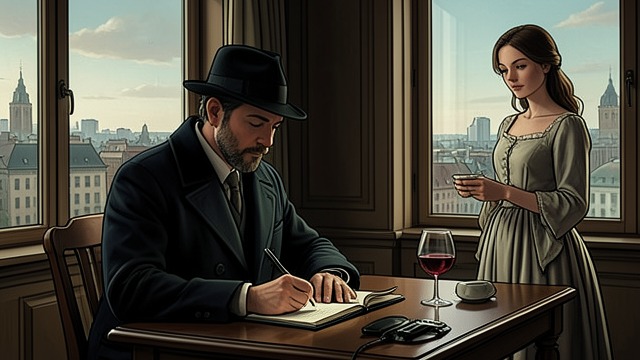
Poetry and Youthful Life
A companion to experience
The narrator’s Muse accompanies feasts, friendships, travel, and romantic imaginings. Poetry absorbs the colors of lived experience rather than remaining separate from it.
The work repeatedly invites readers to notice that its speaker has personal stakes in the subjects he narrates.
Distance and self-mockery
The narrator resists being reduced to his hero, yet admits that fiction can reflect its author’s individuality.
This tension gives the poem both intimacy and irony: the speaker participates in the material while remaining able to question his own performance.
The Muse Enters the Story
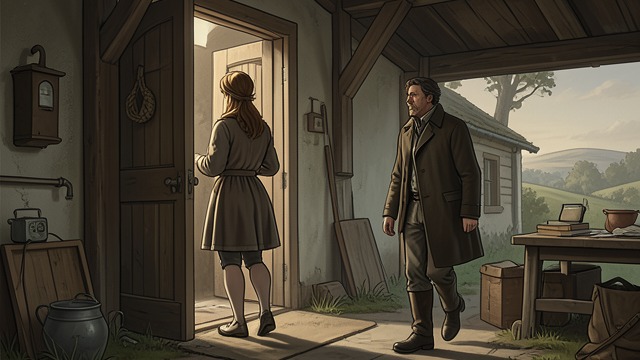
The Muse Enters the Story
A change of subject
The narrator brings the Muse into scenes of rural life and young love, moving from city spectacle toward Tattiana’s interior world.
The shift allows the romance to describe ordinary domestic surroundings without pretending that they are grand or exotic.
A self-aware form
The narrator comments on literary conventions, the kinds of heroes readers expect, and the hazards of imitating fashionable models.
The resulting voice keeps the story’s emotions vivid while making its inherited romantic language part of the subject.
The Muse at the Grave
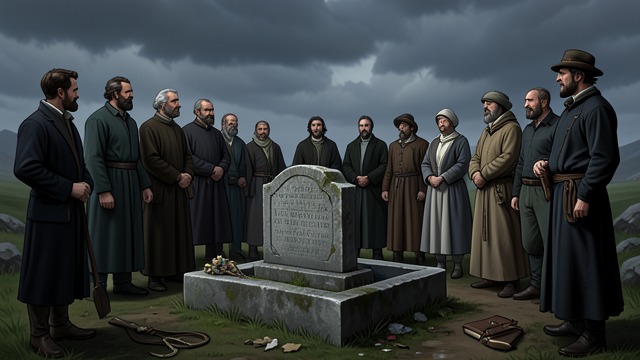
The Muse at the Grave
Poetry meets irreversible loss
After Lensky dies, the narrator pauses over the life that might have unfolded and the poem the young man might have written.
The elegiac reflection gives the dead poet more than a narrative function: it imagines the unmade work and unrealized future lost with him.
The speaker grows older
The narrator also notices his own changing relationship to rhyme and youth. Former ambitions now meet colder thoughts and greater weariness.
The bereavement thus alters both the story and the storyteller’s sense of what poetry can recover.
An Unfinished Farewell
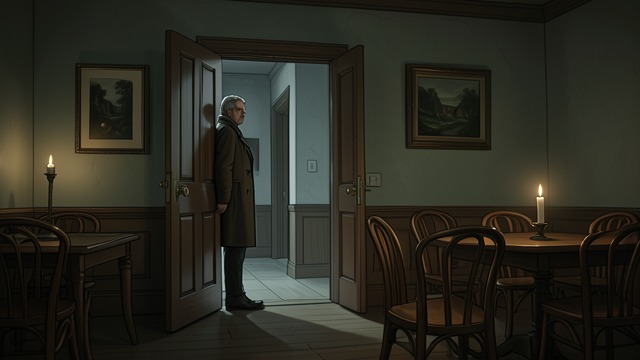
An Unfinished Farewell
The narrator releases the characters
The narrator bids farewell to Eugene, Tattiana, and the book itself, treating their imagined company as part of a life that has passed.
The closing gesture makes separation between author, characters, and readers the final subject of the work.
Memory without completion
The story ends without giving Eugene’s next action or a repaired future for the lovers. The narrator compares this incompletion to lives cut short or left behind.
The open ending preserves loss rather than covering it with a convenient resolution.
during the narrator’s youth at the Lyceum
during the narrator’s early social and literary years
as the narrative turns from urban life to the countryside
after Lensky’s death
at the romance’s ending
